

Best overall for Minnesota: Trane XV20i. Best for smart home integration: Carrier Infinity 24. Best budget option: Goodman GSXC18. This guide ranks five central air conditioner lines against the humidity, storms and shoulder-season swings that define Minnesota summers in 2026.
- Trane XV20i is the best central air conditioner for Minnesota’s humid summers in 2026.
- Carrier Infinity 24 wins for smart thermostat pairing and room-by-room temperature control.
- Goodman GSXC18 is the budget pick but trades away humidity control higher tiers offer.
- DOE’s SEER2 standard sets a 14.3 minimum efficiency floor for Minnesota’s climate region.
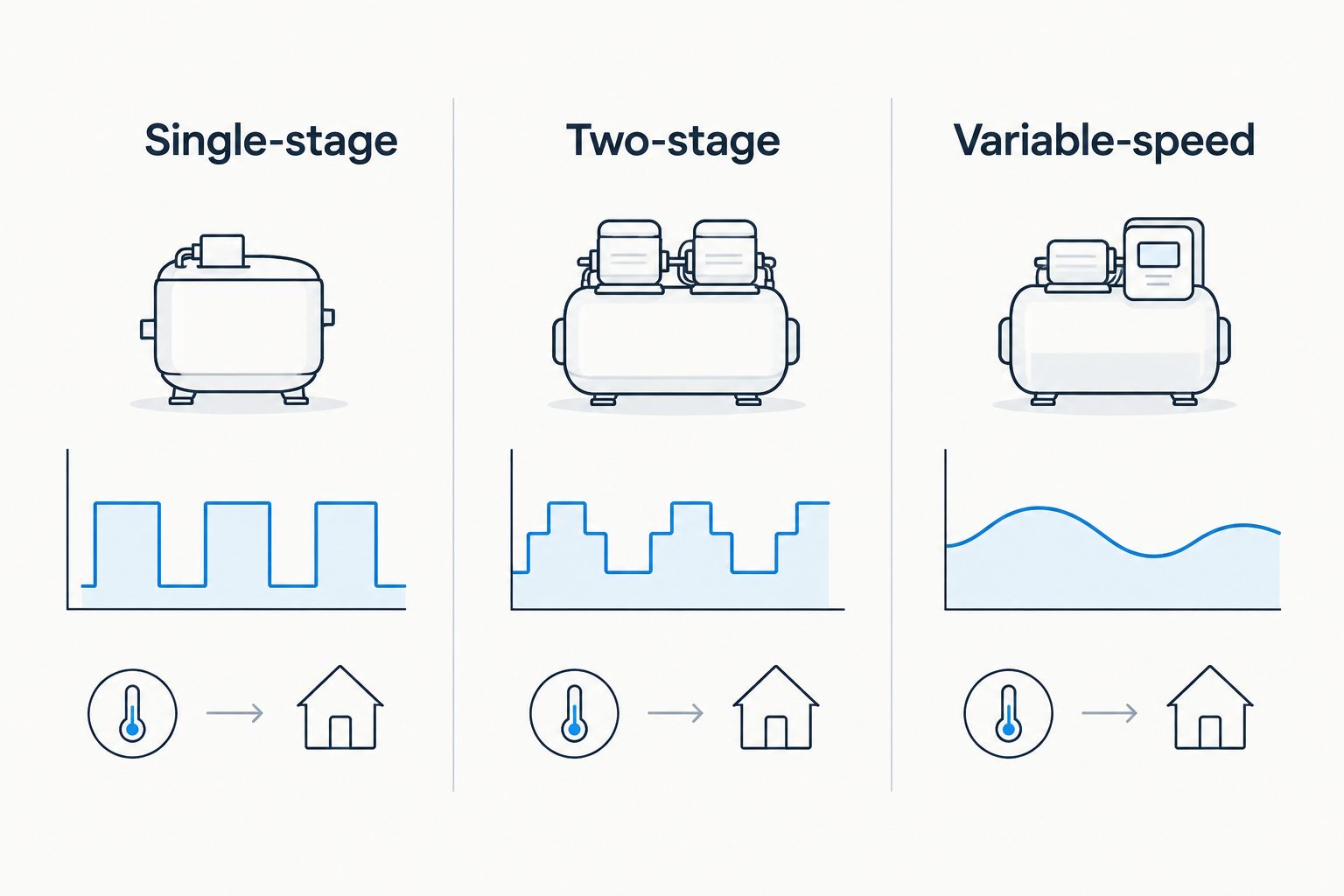
- Variable-speed compressors handle Minnesota’s muggy August stretches better than single-stage units.
Why this matters
Minnesota's cooling season is short, but it's humid enough that the wrong system makes ten to twelve weeks of the year miserable indoors. A central air conditioner sized and staged for a dry climate leaves rooms feeling clammy at 72 degrees, because it satisfies the thermostat before it pulls enough moisture out of the air.
Shoulder-season weather adds a second problem. May and September bring cool nights and warm afternoons, and a single-stage compressor that only knows "on" or "off" short-cycles constantly during those low-load days, wasting energy and wearing out parts faster. Schwantes Heating installs and services central air systems across Minnesota, and the pattern shows up every spring: oversized, single-stage units that cool fast but never run long enough to dehumidify.
“If the AC can’t run more than 12 minutes on a 78-degree day without cycling off, it’s oversized for the house.”
The five systems below are ranked on how they handle that specific mix of Minnesota humidity, storm exposure and shoulder-season load, not on raw tonnage or brand reputation alone.
What makes the best central air conditioner for Minnesota
- Humidity removal, not just cooling — a unit that hits the setpoint fast but cycles off quickly leaves moisture behind.
- Low-load performance during shoulder months — Minnesota's May, June and September days need a system that can throttle down without short-cycling.
- Noise output on tight suburban lots — outdoor units sit close to bedroom windows in most Twin Cities and inner-ring suburbs.
- Compressor staging — single-stage, two-stage and variable-speed compressors behave very differently across a Minnesota summer.
- Parts and service network across the state — rural Minnesota has fewer techs certified on some premium platforms than the metro does.
- Compatibility with the existing furnace or air handler — most Minnesota homes pair the AC with a furnace blower, and mismatched equipment caps efficiency regardless of the AC's rating.
Central air conditioners for Minnesota at a glance
| Model | Best for | Standout feature | Key limitation |
|---|---|---|---|
| Trane XV20i | Overall humidity control | Variable-speed compressor modulates output continuously | Needs a matched variable-speed air handler to unlock full performance |
| Carrier Infinity 24 (24VNA0) | Smart thermostat integration | Full-range modulation paired with Carrier's Infinity control system | Best features require Carrier's own thermostat, not a universal smart stat |
| Lennox SL28XCV Signature | Lowest energy bills | Variable-capacity compressor in one of Lennox's highest efficiency tiers | Fewer independent service techs in rural Minnesota than Trane or Carrier |
| American Standard Platinum 20 | Severe-weather durability | Shares its platform with Trane, built for outdoor exposure | Specialty parts take longer to source outside metro service areas |
| Goodman GSXC18 | Budget-conscious buyers | Two-stage compressor at a lower tier than the premium four | Weaker dehumidification during Minnesota's muggiest August stretches |
1. Trane XV20i: best central air conditioner for Minnesota humidity control
The XV20i runs a variable-speed compressor that ramps between low and full capacity instead of snapping on and off. Longer run times at lower speeds pull more moisture out of the air, which matters most on the 85-degree, 70-percent-humidity days Minnesota gets in July and August. Paired with Trane's ComfortLink II control, it can also run different zones at different speeds in a two-story home.
Trane XV20i pros:
- Continuous modulation instead of binary on/off cycling
- Longer, lower-speed runtimes improve indoor humidity control
- Compatible with zoned cooling for multi-level Minnesota homes
Trane XV20i cons:
- Full performance depends on a matched variable-speed air handler, which widens the install scope
- Diagnostics require a technician trained on Trane's variable-speed platform, not every generalist shop
Best for: homeowners who want the tightest indoor humidity control during Minnesota's muggiest weeks.
Verdict: Buy.
2. Carrier Infinity 24: best central air conditioner for Minnesota smart home integration
The Infinity 24 (model 24VNA0) is Carrier's variable-speed flagship, built to work with the Infinity control system for room-by-room temperature tracking. It communicates directly with Carrier's own thermostat and sensors, so a household already leaning on smart home controls gets the most out of it.
Carrier Infinity 24 pros:
- Deep integration with Carrier's Infinity thermostat and remote sensors
- Quiet operation at partial-load speeds, useful on tight suburban lots
- Strong humidity control comparable to Trane's variable-speed tier
Carrier Infinity 24 cons:
- The full smart feature set locks you into Carrier's own thermostat rather than a universal smart stat like the ones covered in the best smart thermostats for cold climates guide
- Service network favors metro areas over rural Minnesota counties
Best for: households that already run, or plan to run, a connected smart home setup.
Verdict: Buy.
3. Lennox SL28XCV Signature: best central air conditioner for Minnesota energy bills
Lennox's SL28XCV uses a variable-capacity compressor built for one of the highest efficiency tiers the company sells, which matters over a Minnesota cooling season that, while short, still adds up on a summer electric bill. It targets buyers who care more about long-term operating cost than upfront system complexity.
Lennox SL28XCV pros:
- Variable-capacity compressor built for high-efficiency operation
- Strong fit for homeowners planning to stay in the house long enough to recoup efficiency gains
- Quiet at low speeds, similar to the Trane and Carrier variable-speed tiers
Lennox SL28XCV cons:
- Fewer independent service techs trained on Lennox's premium tier outside the Twin Cities metro
- Premium efficiency tiers add install complexity similar to Trane and Carrier's top units
Best for: homeowners prioritizing the lowest possible summer energy bills over brand familiarity.
Verdict: Buy.
4. American Standard Platinum 20: best central air conditioner for Minnesota storm durability
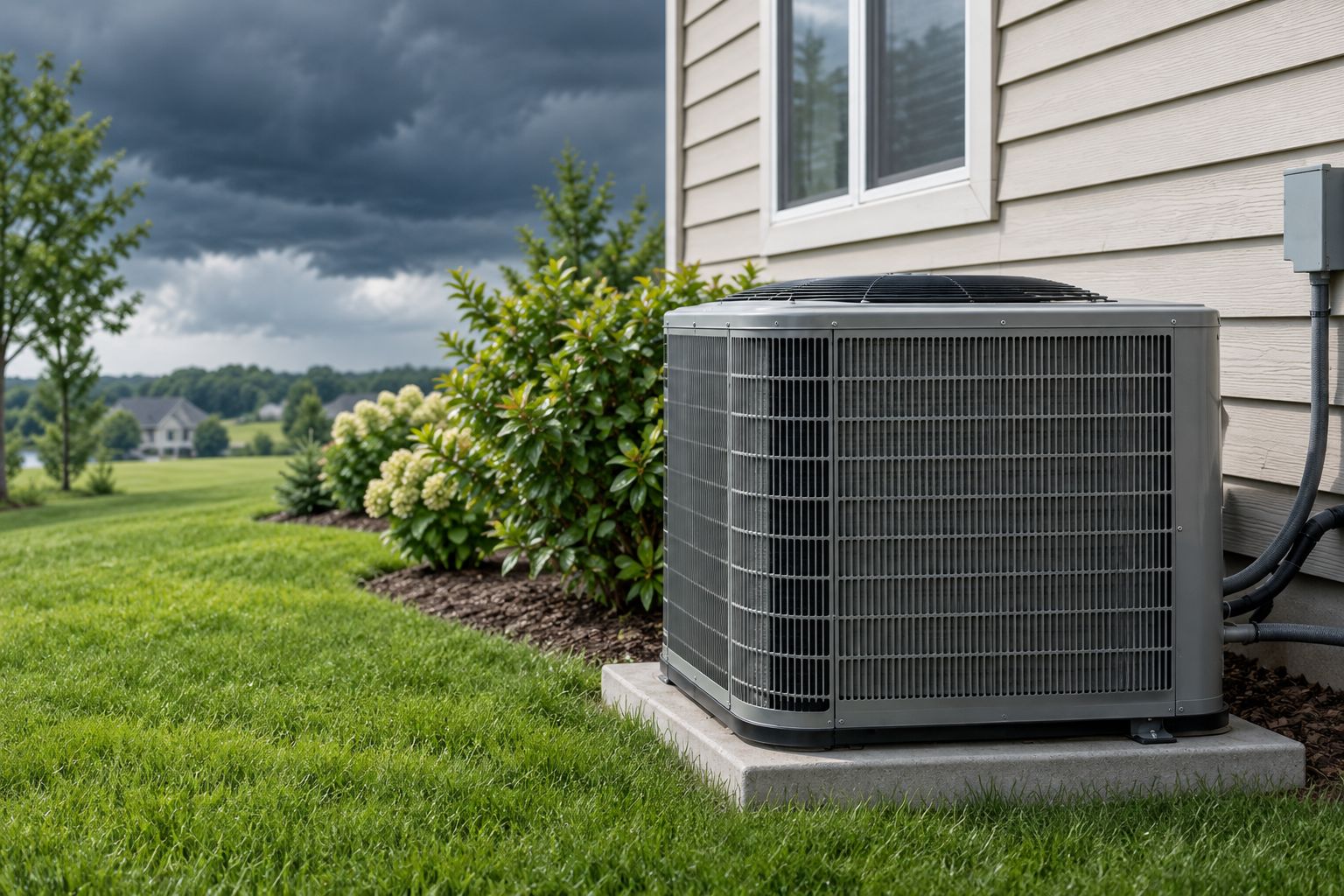
American Standard and Trane share a parent company and much of the same engineering, and the Platinum 20 reflects that shared platform in a cabinet built for outdoor exposure. That matters in Minnesota, where hail and sudden temperature swings stress an outdoor condenser more than steady climates do.
American Standard Platinum 20 pros:
- Shared engineering platform with Trane's variable-speed line
- Cabinet construction built for outdoor exposure to hail and temperature swings
- Strong humidity control performance comparable to Trane's XV20i
American Standard Platinum 20 cons:
- Specialty parts can take longer to source outside major Minnesota metro service areas
- Brand recognition among homeowners lags Trane and Carrier, which can complicate resale conversations
Best for: homeowners in storm-prone or exposed lots who prioritize outdoor durability.
Verdict: Buy.
5. Goodman GSXC18: best budget central air conditioner for Minnesota
The GSXC18 runs a two-stage compressor, a step up from a basic single-stage unit but well short of the variable-speed tier above it. It's the right call when the install budget is capped and the priority is reliable cooling rather than precise humidity control.
Goodman GSXC18 pros:
- Two-stage compressor at a lower tier than the premium four
- Simpler system design means a shorter, less complex install
- Wide availability of parts and generalist service techs across Minnesota
Goodman GSXC18 cons:
- Weaker dehumidification during Minnesota's muggiest August stretches compared to variable-speed units
- Two stages still cycle more than a variable-speed compressor during shoulder-season low loads
Best for: budget-limited installs where reliable cooling matters more than fine humidity control.
Verdict: Buy for budget-capped installs, skip if humidity control is the priority.
Get a Minnesota-specific AC recommendation
A load calculation matters more than the brand name on the unit.
How we ranked
Each system was weighed against the six criteria above: humidity removal, low-load shoulder-season performance, outdoor noise, compressor staging, parts and service access across Minnesota, and compatibility with existing furnace equipment. Variable-speed units (Trane, Carrier, Lennox, American Standard) scored highest on humidity control and shoulder-season behavior. Goodman's two-stage design scored lower there but highest on service network breadth and install simplicity, which is why it holds the budget slot rather than getting cut from the list entirely.
Which central air conditioner should you choose?
If you're not sure where to start, the Trane XV20i is the safest default for most Minnesota homes in 2026 — it handles humidity and shoulder-season load without requiring a specific smart home ecosystem. Choose the Carrier Infinity 24 if the household is already invested in connected controls, the Lennox SL28XCV if the summer electric bill is the main concern, the American Standard Platinum 20 for storm-exposed lots, and the Goodman GSXC18 when the install budget is the deciding factor over precise humidity control.
FAQ
What’s the best central air conditioner for Minnesota’s summers in 2026?
The Trane XV20i ranks best overall for Minnesota because its variable-speed compressor holds tighter humidity control through muggy stretches than single or two-stage units. Carrier Infinity 24 and Lennox SL28XCV are close competitors for smart integration and energy bills respectively.
Is a variable-speed air conditioner worth it in Minnesota?
Yes, for most Minnesota homes, because variable-speed compressors run longer at lower speeds and pull more moisture out of the air during humid summer weeks. The tradeoff is a more complex install that usually needs a matched variable-speed air handler.
How does SEER2 affect a central air conditioner in Minnesota?
SEER2 is the efficiency metric the Department of Energy put in place in 2023, and split systems in Minnesota’s climate region must meet a 14.3 minimum. Higher-tier units like the Trane XV20i and Lennox SL28XCV sit well above that floor.
Can a central air conditioner run efficiently during Minnesota’s shoulder seasons?
Variable-speed and two-stage compressors handle May, June and September cooling loads better than single-stage units, which tend to short-cycle on cooler days. Short-cycling wastes energy and adds wear to the compressor over a Minnesota cooling season.
Is Carrier or Trane better for a Minnesota installation?
Both perform similarly on humidity control at the variable-speed tier; the difference is ecosystem. Carrier’s Infinity 24 rewards households already using Carrier’s smart thermostat, while Trane’s XV20i works well with a broader range of thermostats.
How loud should a central air conditioner be on a tight suburban lot?
Variable-speed units like the Trane XV20i, Carrier Infinity 24 and Lennox SL28XCV run quieter at partial load than single or two-stage compressors, which matters most on lots with bedroom windows near the outdoor unit. Ask an installer for sound-level comparisons specific to the model and mounting location.
Does a new central air conditioner need to match the existing furnace?
In most Minnesota homes, yes — the AC shares the blower and ductwork with the furnace, so mismatched equipment caps the system’s overall efficiency. A licensed installer should confirm compatibility with the existing furnace or air handler before recommending a specific AC model.
One last thing
The brand on the outdoor unit matters less than most buyers assume. A Manual J load calculation — sizing the system to the actual house instead of a rule-of-thumb tonnage estimate — determines more of the real-world humidity control and energy bill than the difference between a Trane XV20i and an American Standard Platinum 20. Ask any installer quoting a 2026 replacement whether they're running that calculation or just matching the old unit's size.
Related guides

