

Best overall: WaterFurnace Series 7 Variable Speed. Best for hot water plus heating and cooling: ClimateMaster Trilogy 45. Best budget option: GeoStar Sycamore Series. Those three cover most Minnesota homeowners weighing a geothermal heat pump system for 2026, and the five systems ranked below split the rest of the decision by loop type, mechanical room space, and retrofit needs.
- WaterFurnace Series 7 Variable Speed is the best overall geothermal heat pump system for Minnesota’s cold ground temperatures in 2026.
- ClimateMaster Trilogy 45 pairs space heating and cooling with domestic hot water production in one unit.
- Bosch Greensource Compress fits tight mechanical rooms where a full-size cabinet won’t clear the doorway.
- GeoStar Sycamore Series is the budget entry point for homeowners who don’t need variable-speed capacity.
- ClimateMaster Tranquility 30 is built for retrofits into existing forced-air ductwork.
Why this matters
A geothermal heat pump system swaps a furnace and air conditioner for one loop that moves heat into and out of the ground. In Minnesota, ground temperature below the frost line holds around 45 to 50 degrees year-round, which means a properly sized system stays efficient through January cold snaps that would push an air-source heat pump into constant backup heat.
The catch is the equipment isn't interchangeable. A vertical closed loop, a variable-speed compressor, and a desuperheater for hot water are three separate decisions, and picking the wrong combination for your lot size or ductwork means a system that underperforms for the next 20 years. Schwantes Heating installs and services all five systems below across Minnesota, and the differences between them show up fastest in a cold snap, not a mild fall afternoon.
What makes the best geothermal heat pump system
- Cold-climate performance — how the unit behaves as entering water temperature drops toward 30 degrees
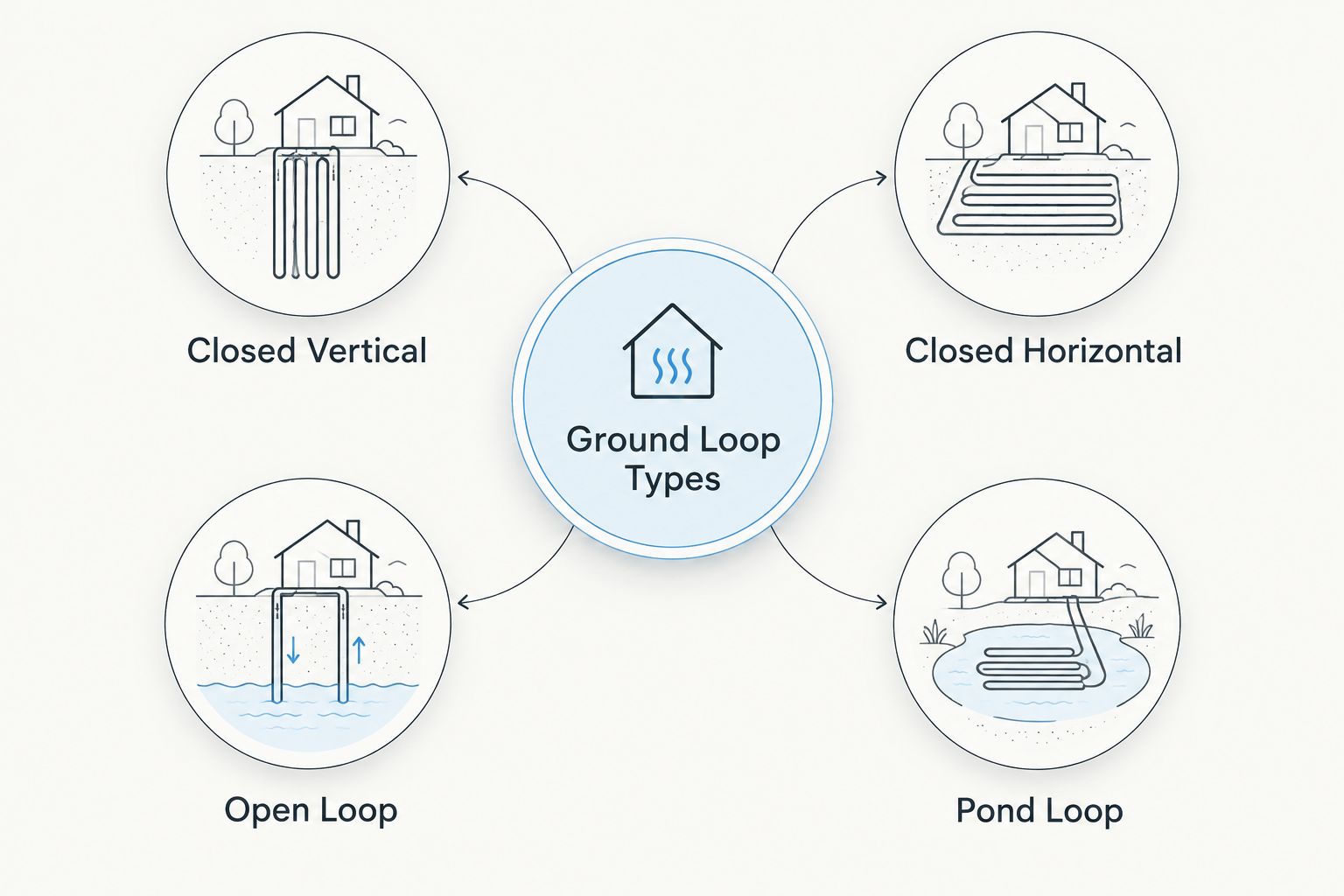
- Loop compatibility — closed vertical, closed horizontal, open-loop, or pond loop, matched to your lot
- Compressor staging — variable-speed units track load more precisely than single-stage models
- Hot water integration — a desuperheater or full hot water generator offsets water heating cost
- Cabinet footprint — mechanical room clearance in older Minnesota basements is often tighter than new construction
- Local service network — parts availability and technician familiarity matter more than a spec sheet once the system is five years old
Geothermal heat pump systems at a glance
| System | Best for | Standout feature | Key limitation |
|---|---|---|---|
| WaterFurnace Series 7 Variable Speed | Minnesota winters overall | Variable-capacity compressor rated for very cold entering water | Higher upfront equipment cost than single-stage models |
| ClimateMaster Trilogy 45 | Combined heating, cooling, and hot water | Full hot water generator, not just a desuperheater | Larger cabinet needs more mechanical room space |
| Bosch Greensource Compress | Tight mechanical rooms | Compact cabinet fits through standard basement doorways | Fewer capacity tiers than WaterFurnace or ClimateMaster |
| GeoStar Sycamore Series | Budget-conscious buyers | Lower entry cost with two-stage compressor option | No variable-speed tier for maximum cold-weather efficiency |
| ClimateMaster Tranquility 30 | Retrofitting existing ductwork | Single-stage design matches older duct static pressure | Less efficient than variable-speed systems at part load |
1. WaterFurnace Series 7 Variable Speed: best geothermal heat pump for Minnesota winters
WaterFurnace is an Indiana-based manufacturer that's been building water-source heat pumps for decades, and the Series 7 is its variable-speed flagship. The compressor modulates capacity instead of cycling on and off, which keeps the system running efficiently as ground loop temperatures drop through a Minnesota February.
WaterFurnace Series 7 pros:
- Variable-speed compressor holds efficiency at low entering water temperatures
- Quiet operation compared to single-stage units, useful when the unit sits near living space
- Compatible with vertical, horizontal, and pond loop configurations
WaterFurnace Series 7 cons:
- Costs more upfront than GeoStar or Tranquility single-stage models
- Variable-speed electronics mean repairs need a technician familiar with the platform
Best for: homeowners building new construction or replacing an aging furnace who want the highest cold-climate performance available.
Verdict: Buy if cold-weather efficiency is the priority and budget allows for the premium tier.
2. ClimateMaster Trilogy 45: best geothermal heat pump for hot water plus heating and cooling
ClimateMaster, based in Oklahoma, built the Trilogy 45 around a hot water generator that produces domestic hot water as part of the normal heating and cooling cycle, not just a byproduct like a basic desuperheater. That makes it the pick for households that want one system covering three jobs.
ClimateMaster Trilogy 45 pros:
- Produces domestic hot water alongside space conditioning
- Two-stage or variable-speed compressor options depending on model tier
- Strong fit for larger households with high hot water demand
ClimateMaster Trilogy 45 cons:
- Larger cabinet than the Bosch or GeoStar units, needs more clearance
- The hot water generator adds a component that can need service over the unit's life
Best for: larger households or homes with high water heating demand that want to consolidate equipment.
Verdict: Buy for households that will actually use the hot water generation; Skip if your water heater is already efficient and newer.
3. Bosch Greensource Compress: best geothermal heat pump for tight mechanical rooms
Bosch's Greensource Compress line targets homes where the mechanical room or basement stairwell can't fit a full-size cabinet. The compact footprint matters more in older Minnesota homes with narrow basement doorways than it does in new construction.
Bosch Greensource Compress pros:
- Compact cabinet fits through standard doorways for basement retrofits
- Lower sound output than older single-stage designs
- Straightforward controls for homeowners who don't want a complex interface
Bosch Greensource Compress cons:
- Fewer capacity and staging tiers than WaterFurnace or ClimateMaster
- Limited hot water integration compared to the Trilogy 45
Best for: older homes with cramped basements where equipment access is the constraint, not performance.
Verdict: Buy for tight-space retrofits; Skip if your mechanical room already fits a larger cabinet.
4. GeoStar Sycamore Series: best budget geothermal heat pump system
GeoStar, part of Enertech, builds the Sycamore Series as an entry point into geothermal without the premium variable-speed price tag. It's a two-stage compressor design that trades some part-load efficiency for a lower installed system cost.
GeoStar Sycamore pros:
- Lower equipment cost than variable-speed alternatives
- Two-stage compressor still outperforms a single-stage-only system
- Simple platform with fewer electronic components to service
GeoStar Sycamore cons:
- No variable-speed tier, so it won't match Series 7 efficiency in deep cold
- Fewer hot water integration options than ClimateMaster
Best for: budget-conscious buyers who still want the long-term operating savings of a ground loop over a furnace and central air setup.
Verdict: Buy as the entry-level geothermal heat pump system; Consider upgrading to variable-speed if the budget stretches.
5. ClimateMaster Tranquility 30: best geothermal heat pump for retrofitting existing ductwork
The Tranquility 30 is ClimateMaster's single-stage model, sized to match the static pressure of ductwork already installed for an older furnace. That makes it a straightforward swap when the ducts stay and only the heating and cooling source changes.
ClimateMaster Tranquility 30 pros:
- Matches older duct static pressure without a full duct redesign
- Simpler single-stage controls, fewer components to fail
- Lower cost than the two-stage or variable-speed models above
ClimateMaster Tranquility 30 cons:
- Less efficient at part load than two-stage or variable-speed units
- Cycles on and off more than the higher tiers, which shows up as less even comfort
Best for: homeowners keeping existing ductwork and prioritizing installation simplicity over peak efficiency.
Verdict: Consider for a straight duct-compatible swap; Skip if you're already planning duct modifications, since a two-stage unit is worth the upgrade at that point.
How we ranked these
Each system was measured against the six criteria above: cold-climate performance, loop compatibility, compressor staging, hot water integration, cabinet footprint, and local service support. WaterFurnace and ClimateMaster lead on staging and hot water integration; Bosch and GeoStar win on footprint and cost; Tranquility 30 wins on ductwork compatibility alone. No single system topped every category, which is why the list splits by use case instead of stacking every brand against WaterFurnace.
Which geothermal heat pump system should you choose?
If you're building new construction or replacing a failing furnace in 2026 and want the best cold-weather performance, the WaterFurnace Series 7 Variable Speed is the default pick. Choose the ClimateMaster Trilogy 45 if domestic hot water is a real cost line in your household budget. Go GeoStar Sycamore if the loop and installation cost already stretch the budget, and stick with the Tranquility 30 or Bosch Compress only when ductwork or basement clearance rules out the other three.
Get a geothermal system evaluated for your home
Schwantes Heating checks lot size, ductwork, and loop options before recommending a system.
FAQ
What is the best geothermal heat pump system for 2026?
The WaterFurnace Series 7 Variable Speed is the best overall geothermal heat pump system for 2026 in cold climates because its variable-speed compressor holds efficiency as ground loop temperatures drop. ClimateMaster Trilogy 45 and GeoStar Sycamore rank higher for hot water integration and budget, respectively.
How much does a geothermal heat pump system cost to run compared to a furnace?
Geothermal systems draw on stable ground temperatures instead of burning fuel, which typically lowers monthly heating cost compared to a furnace, though the exact savings depend on loop type, home size, and local utility rates.
Is a closed-loop or open-loop geothermal system better?
A closed loop works on almost any lot and recirculates the same fluid indefinitely, while an open loop needs a reliable well and local water rights and generally costs less to install where groundwater supports it.
Can a geothermal heat pump system work in Minnesota winters?
Yes. Ground temperature below the frost line in Minnesota holds around 45 to 50 degrees year-round, which keeps a properly sized geothermal heat pump system efficient through sub-zero air temperatures.
Do geothermal heat pump systems need backup heat?
A correctly sized geothermal system typically doesn’t need backup heat, unlike an air-source heat pump, because the ground loop stays far warmer than outdoor winter air.
How long does a geothermal ground loop last?
Ground loops are generally rated for multiple decades of service since the buried piping has no moving parts, though the above-ground heat pump unit itself has a shorter service life and gets replaced separately.
Is ClimateMaster or WaterFurnace better for geothermal heating?
WaterFurnace’s Series 7 leads on variable-speed cold-climate performance, while ClimateMaster’s Trilogy 45 leads if you also want the system to handle domestic hot water production.
What size yard do I need for a geothermal loop?
A vertical closed loop needs only a small drilling footprint and works on tight lots, while a horizontal loop needs enough open yard space for trenching, which is why lot size decides the loop type before brand comparisons matter.
One last thing
The biggest mistake homeowners make isn't picking the wrong brand — it's sizing the loop for the house they have today instead of the one they'll have in ten years. A vertical loop drilled short to save on installation cost in 2026 becomes the ceiling on your system's efficiency for the next two decades, long after the equipment itself has been upgraded twice.
Related guides
- Best HVAC maintenance plans compared
- Best smart thermostats for cold climates
- Best central air conditioners for Minnesota summers

