

Choosing between HVAC maintenance plans in 2026 comes down to one question: how many systems do you need covered, and how often does your climate punish them? Best overall: the bi-annual comfort system plan. Best for Minnesota's coldest months: the furnace-focused winter readiness plan. Best budget option: the single annual tune-up. Best for whole-home air quality: the humidifier-and-filtration plan.
- The bi-annual comfort system plan wins overall for homes running both a furnace and AC in 2026 — buy it.
- Furnace-focused winter readiness plans matter most in sub-zero Minnesota climates — skip them at your own risk.
- A single annual tune-up is the budget floor, not the best hvac maintenance plans option for older systems.
- Whole-home air quality add-ons pair maintenance visits with humidifier and filter service for dry winter air.
- Smart-monitored plans suit tech-forward homeowners but add little if you already check filters monthly.
Why this matters
A furnace that never gets a fall inspection is the furnace most likely to fail on the first sub-zero night. The U.S. Department of Energy has recommended annual professional HVAC service for decades because worn igniters, cracked heat exchangers, and clogged filters don't announce themselves — they just quietly cost more in fuel until something breaks. Schwantes Heating sees the same pattern every winter: systems on a documented plan get caught early, systems on no plan get an emergency call in January.
The HVAC maintenance plan market in 2026 splits into a handful of real structures, not dozens of unique products. Once you know what each structure actually covers, picking one takes five minutes.
What makes the best hvac maintenance plans
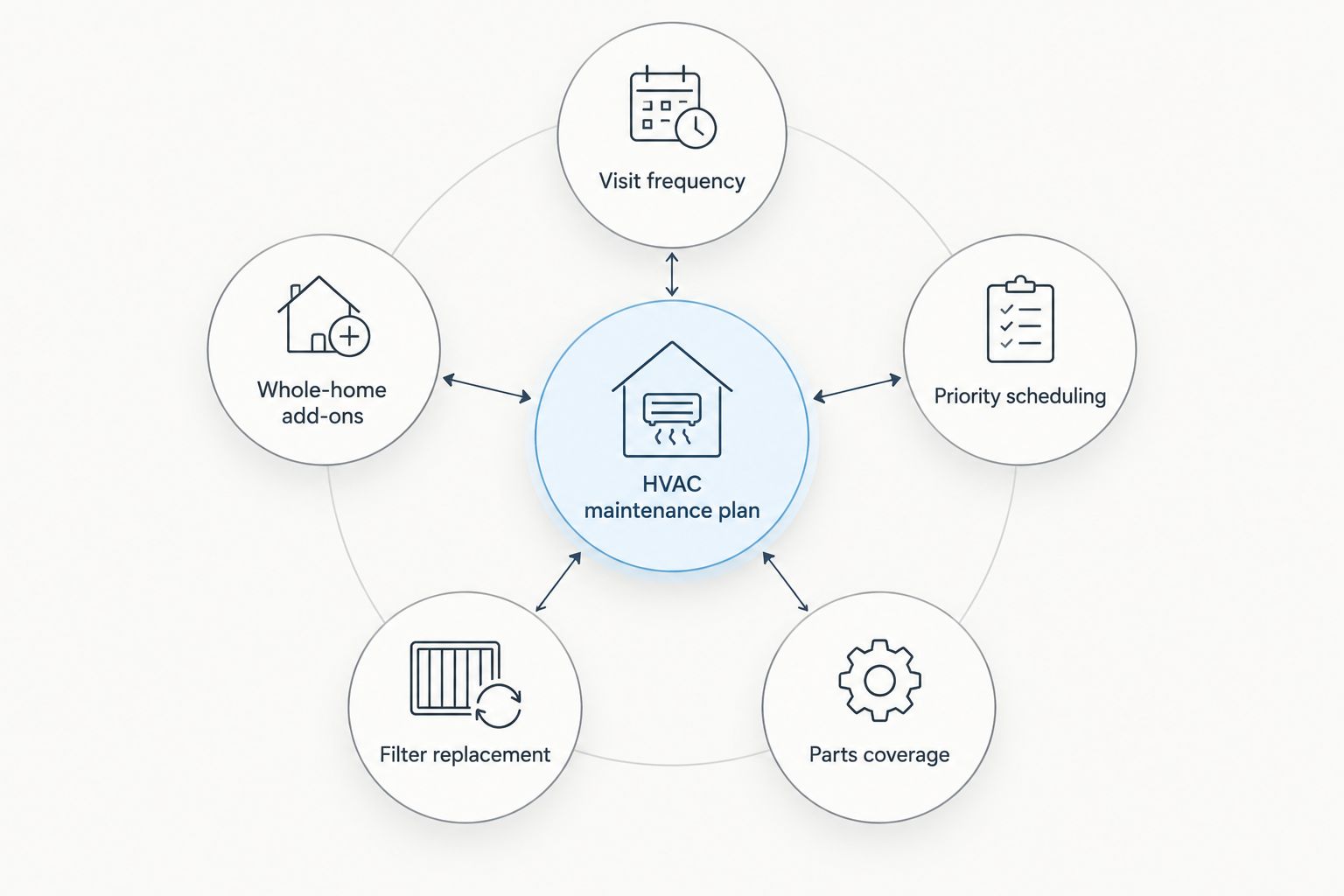
- Scope of systems covered — furnace only, or furnace plus AC, humidifier, and filtration
- Visit frequency — once a year versus spring-and-fall bi-annual service
- Priority scheduling — guaranteed response during peak heating or cooling season
- Parts and labor terms — what's included in the visit versus billed separately
- Add-on flexibility — smart thermostat monitoring, whole-home humidifier tie-ins
- Warranty documentation — manufacturers increasingly require proof of annual service to honor coverage
At a glance
| Plan type | Best for | Standout feature | Key limitation |
|---|---|---|---|
| Bi-annual comfort system plan | Homes running furnace + AC year-round | Two visits catch issues before each peak season | Costs more than a single-visit plan |
| Furnace-focused winter readiness plan | Extreme cold climates like Minnesota | Deep inspection before heating season starts | Leaves summer AC unchecked |
| Single annual tune-up | Renters and starter homes | Lowest commitment, one visit covers basics | Misses seasonal shifts in system stress |
| Whole-home air quality plan | Dry winter air and indoor humidity control | Bundles humidifier service with tune-ups | Adds a system to track and maintain |
| Smart-monitored plan | Tech-forward homeowners | Remote monitoring flags drift between visits | Only useful if you already have a smart thermostat |
1. Bi-annual comfort system plan: best hvac maintenance plan for year-round comfort
This structure sends a technician out twice — once before heating season, once before cooling season — to inspect, clean, and calibrate the whole system. It's the closest thing to a standard in the HVAC industry for households running both a furnace and central AC.
Bi-annual plan pros:
- Catches furnace wear before winter and AC refrigerant issues before summer
- Keeps documentation current for manufacturer warranty claims
- Two touchpoints a year means smaller problems get flagged early
Bi-annual plan cons:
- Requires scheduling two visits instead of one
- Doesn't include humidifier or air quality add-ons by default
Best for: homes with both a furnace and central AC that want the fewest surprises in 2026.
Verdict: Buy.
2. Furnace-focused winter readiness plan: best hvac maintenance plan for Minnesota winters
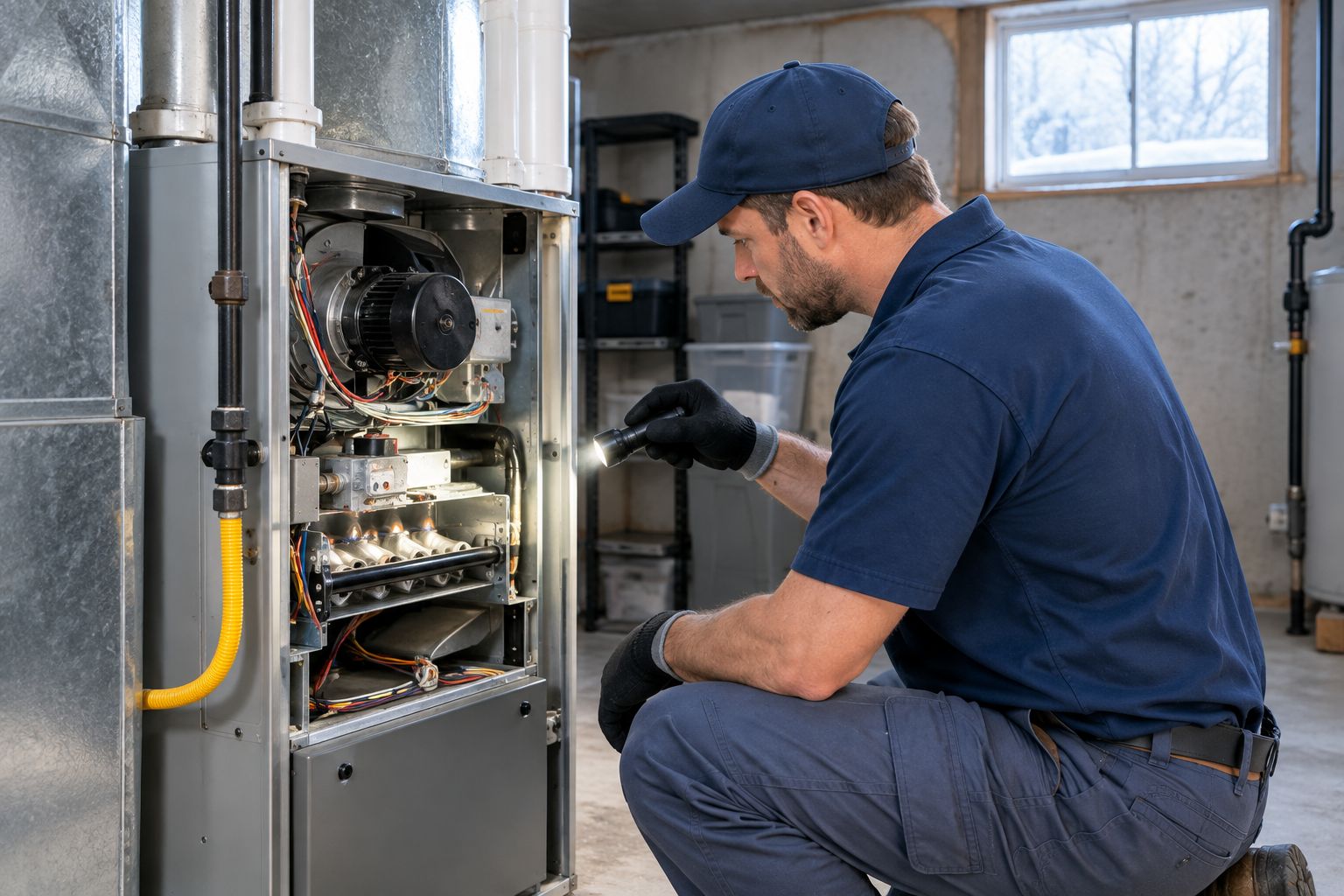
Built around a single deep furnace inspection before the cold sets in, this plan skips AC service entirely. It's the right call in regions where winter reliability matters more than summer comfort. Pair it with the guidance in Schwantes Heating's guide to the best furnaces for Minnesota winters if your unit is approaching the age where replacement starts beating repair.
Furnace-focused plan pros:
- Concentrates the visit on the system most likely to fail in extreme cold
- Cheaper commitment than a full bi-annual plan
- Includes filter and ignition checks specific to heating performance
Furnace-focused plan cons:
- Leaves the AC system unmonitored through summer
- Not enough coverage for homes with older, higher-maintenance equipment
Best for: homes where winter reliability is the priority and AC gets minimal summer use.
Verdict: Buy.
3. Single annual tune-up: best hvac maintenance plan for renters and starter homes
One visit, once a year, covering the basics — filter check, thermostat calibration, a general inspection. It's the floor of what counts as maintenance, not the ceiling.
Single tune-up pros:
- Lowest time commitment of any plan structure
- Still satisfies most manufacturer warranty documentation requirements
- Good starting point for a first-year homeowner learning their system
Single tune-up cons:
- One visit can't catch problems that develop between seasons
- No coverage for humidifiers, air quality, or smart thermostat integration
Best for: renters, starter homes, or anyone testing whether a plan is worth the commitment before upgrading.
Verdict: Hold.
4. Whole-home air quality plan: best hvac maintenance plan for dry winter air
This structure bundles standard tune-up visits with humidifier service and filtration checks — relevant anywhere winter heating strips indoor humidity down to uncomfortable levels. If dry air, static shocks, and cracked woodwork are a recurring winter complaint, this is the plan built for it. Schwantes Heating's guide to whole-home humidifiers for dry winter air covers sizing and placement if you're adding one for the first time.
Air quality plan pros:
- Keeps humidifier pads and filters serviced alongside the furnace visit
- Addresses comfort complaints tune-up-only plans ignore
- One scheduled visit instead of separate humidifier and furnace appointments
Air quality plan cons:
- Adds a system (the humidifier) that needs its own maintenance tracking
- Not worth it if you don't run a whole-home humidifier
Best for: households already dealing with dry winter air or planning to add a humidifier in 2026.
Verdict: Buy.
5. Smart-monitored plan: best hvac maintenance plan for tech-forward homeowners
This add-on layers remote monitoring through a smart thermostat on top of a standard maintenance visit, flagging drift in temperature or runtime between scheduled service. It only earns its keep if you're already invested in a connected thermostat setup — check Schwantes Heating's picks for the best smart thermostats for cold climates before committing to this tier.
Smart-monitored plan pros:
- Surfaces performance drift between physical visits
- Useful data if you're troubleshooting an inconsistent system
- Pairs naturally with existing smart home setups
Smart-monitored plan cons:
- Adds no value without a compatible smart thermostat already installed
- Monitoring data doesn't replace an in-person inspection
Best for: homeowners who already run a smart thermostat and want data between visits.
Verdict: Wait — install the thermostat first, add monitoring second.
How we ranked
Each plan structure was measured against the six criteria above: system scope, visit frequency, priority scheduling, parts and labor terms, add-on flexibility, and warranty documentation. The bi-annual comfort system plan wins overall because it's the only structure that scores well across every criterion instead of trading one off for another.
“A furnace that skips its fall tune-up is the furnace most likely to fail on the coldest night of the year.”
Get your 2026 maintenance plan set
Talk through which plan structure fits your system before heating season peaks.
Which hvac maintenance plan should you choose?
If you're running both a furnace and central AC and want the fewest surprises through 2026, the bi-annual comfort system plan is the default answer. Drop to the furnace-focused winter readiness plan only if summer cooling genuinely doesn't matter in your home. Add the whole-home air quality tier the moment dry winter air becomes a recurring complaint, not before. Skip the smart-monitored add-on until the thermostat side is already in place.
FAQ
What’s the best hvac maintenance plan for 2026?
The bi-annual comfort system plan is the best overall choice for 2026 because it covers both furnace and AC with two seasonal visits. Homes without central AC do better with a furnace-focused winter readiness plan.
Is a bi-annual plan better than a single annual tune-up?
Yes, for any home running both heating and cooling systems. A single annual visit only catches issues once a year, while bi-annual service checks the furnace before winter and the AC before summer.
How much does an HVAC maintenance plan cost?
Pricing varies by provider and region, so check current rates directly with a local company. Ask specifically what’s included per visit before comparing plans on price alone.
Do I need a maintenance plan if my furnace is new?
Most manufacturer warranties in 2026 require documented annual service to stay valid, even on new equipment. Skipping maintenance can void coverage regardless of how new the system is.
What’s included in a furnace-focused winter readiness plan?
A furnace-focused plan typically covers burner inspection, heat exchanger check, ignition system testing, and filter replacement ahead of heating season. It does not include AC service.
Should I add a humidifier to my maintenance plan?
Add a humidifier plan if dry winter air is causing static, cracked woodwork, or comfort complaints in your home. If humidity isn’t an issue, the standard bi-annual plan covers what you need.
Does a smart thermostat replace the need for maintenance visits?
No. A smart thermostat can flag performance drift between visits, but it can’t physically inspect burners, coils, or filters. It’s an add-on to a plan, not a substitute for one.
How often should HVAC systems be serviced?
At minimum, once a year before heating season. Homes running both furnace and central AC benefit from twice-yearly service, once per system, ahead of each peak season.
One last thing
The detail most homeowners miss in 2026: warranty paperwork increasingly requires a dated, itemized service record, not just proof that a technician showed up. A single annual tune-up plan that doesn't document filter type, refrigerant levels, or ignition test results can leave you unprotected on a claim even though you technically had "maintenance." Ask any provider upfront exactly what gets documented per visit before you sign onto a plan.
Related guides

