

Best overall for cold climates: Ecobee Smart Thermostat Premium. Best for large, unevenly heated homes: Honeywell Home T9. Best for homes without a C-wire: Emerson Sensi Touch 2. Best for electric baseboard heat: Mysa Smart Thermostat. Google Nest Learning Thermostat rounds out the list as the pick for straightforward furnace or boiler setups that don't need advanced heat pump management.
- Ecobee Smart Thermostat Premium wins overall for cold climates because it manages heat pump aux-heat lockout automatically.
- Honeywell Home T9 is the best smart thermostat for cold climate homes with rooms that heat unevenly.
- Emerson Sensi Touch 2 is the pick when a house has no C-wire and no plan to run new wiring.
- Mysa Smart Thermostat is the only option here built for electric baseboard heaters, common in older northern homes.
- Google Nest Learning Thermostat suits simple furnace or boiler systems without dual-fuel or multi-stage heating.
Why this matters
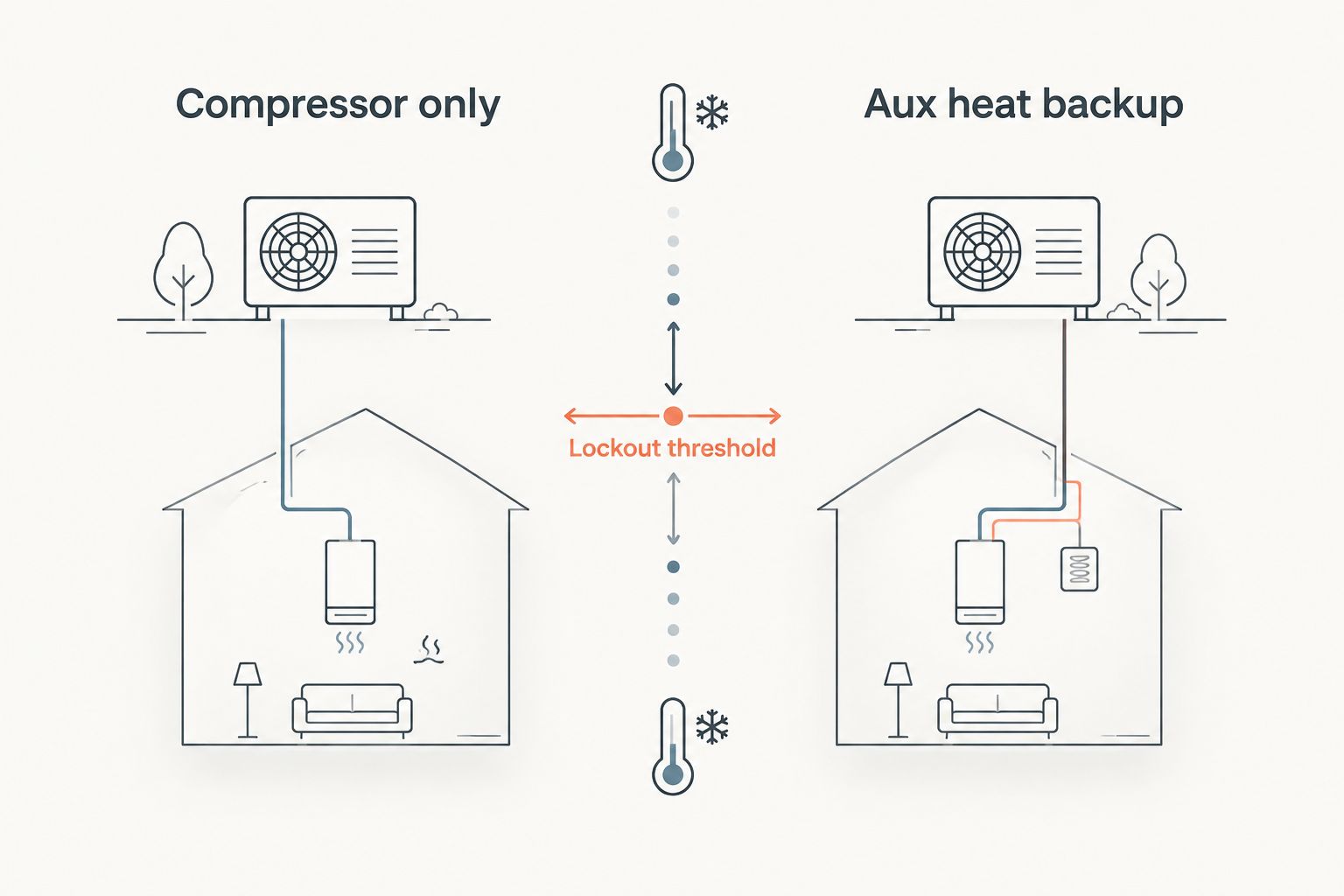
A thermostat built for mild climates behaves badly once temperatures drop below freezing for weeks at a time. The biggest failure mode: a heat pump's backup heat (aux or emergency heat) kicks in too soon, running expensive electric resistance strips instead of the compressor, and the homeowner never notices until the bill arrives.
Cold-climate homes also tend to have older wiring, uneven duct runs, and a mix of heating equipment — a furnace paired with a heat pump, or baseboard heaters in an addition. The thermostats installed by Schwantes Heating technicians on winter service calls get chosen for how well they handle exactly this mismatch, not for how many app features they ship with.
What makes the best smart thermostat for cold climates
- Aux/emergency heat lockout control — settings that delay backup electric heat until the compressor genuinely can't keep up
- Compatibility without a C-wire — many older cold-climate homes were wired before smart thermostats existed
- Remote or room sensors — corrects for a cold room far from the main return, common in additions and finished basements
- Dual-fuel and multi-stage support — needed for homes running a furnace and heat pump together
- Local schedule fallback — keeps heating running on a set schedule if Wi-Fi or the app server goes down mid-storm
- Line-voltage compatibility — required if any zone runs on electric baseboard or in-floor radiant heat
Best smart thermostats for cold climates in 2026: at a glance
| Thermostat | Best for | Standout feature | Key limitation |
|---|---|---|---|
| Ecobee Smart Thermostat Premium | Heat pump homes overall | Included room sensor, smart aux-heat management | Extra sensors for more rooms sold separately |
| Google Nest Learning Thermostat | Simple furnace or boiler systems | Learns a schedule automatically within about a week | Less granular aux-heat scheduling on dual-fuel setups |
| Honeywell Home T9 | Large, unevenly heated homes | Smart Room Sensors average temperature across zones | Full sensor coverage needs add-on purchases |
| Emerson Sensi Touch 2 | Homes without a C-wire | Works on many 2-wire systems, no hub required | No room-by-room sensor network |
| Mysa Smart Thermostat | Electric baseboard or radiant heat | Built for line-voltage heaters, one per zone | Not compatible with forced-air furnaces or heat pumps |
1. Ecobee Smart Thermostat Premium: best smart thermostat for cold climate heat pump homes
The Ecobee Smart Thermostat Premium ships with one included room sensor and is built around managing heat pumps that also carry electric backup heat. It reads the SmartSensor network to average temperature across rooms instead of relying on the wall unit alone, and its aux-heat controls are the most configurable in this group.
Ecobee Smart Thermostat Premium pros:
- Includes a remote room sensor out of the box, unlike most competitors
- Aux-heat lockout settings let you control exactly when backup heat engages
- Built-in air quality monitoring adds value beyond temperature control
- Wide compatibility with heat pumps, dual-fuel systems, and multi-stage furnaces
Ecobee Smart Thermostat Premium cons:
- Additional room sensors beyond the first cost extra
- Some smart-home features push toward an optional subscription tier
- The full settings menu takes longer to learn than Nest's simpler interface
Best for: cold-climate homes running a heat pump with electric backup heat. Verdict: Buy.
2. Google Nest Learning Thermostat: best smart thermostat for cold climate homes with simple systems
The Nest Learning Thermostat builds a schedule from how you actually adjust the temperature over the first week or so, then runs it automatically. It handles standard furnace and boiler setups well and supports geofencing so the house doesn't heat an empty home all day.
Google Nest Learning Thermostat pros:
- Learns a workable schedule with minimal manual programming
- Geofencing adjusts temperature automatically when everyone leaves
- Add-on Nest Temperature Sensors correct for cold or hot rooms
- Clean, minimal interface that most household members pick up fast
Google Nest Learning Thermostat cons:
- Dual-fuel and aux-heat scheduling is less granular than Ecobee's or Honeywell's
- Extra room sensors are an added accessory, not included
- Fewer physical controls for households that don't want to use the app
Best for: cold-climate homes with a single furnace or boiler and no complex backup-heat logic to manage. Verdict: Buy.
3. Honeywell Home T9: best smart thermostat for cold climate large homes
The Honeywell Home T9 leans on Smart Room Sensors that average temperature readings across multiple rooms, which matters most in larger homes where one wall-mounted sensor gives a misleading reading. It supports multi-stage heating and heat pump systems with backup heat.
Honeywell Home T9 pros:
- Room sensor averaging directly addresses uneven heat distribution
- Supports multi-stage furnaces and heat pumps with aux heat
- Flexible scheduling by room priority, not just a single setpoint
- Works with most smart home ecosystems without a separate hub
Honeywell Home T9 cons:
- Full multi-room coverage requires buying sensors beyond the base kit
- The mobile app is less polished than Ecobee's or Nest's
- Needs a C-wire in most installs to unlock full functionality
Best for: larger cold-climate homes with rooms that run noticeably colder than the rest of the house. Verdict: Buy.
4. Emerson Sensi Touch 2: best smart thermostat for cold climate homes without a C-wire
Many homes built before central smart-home wiring became standard never got a C-wire run to the thermostat location. The Sensi Touch 2 is built to work on many existing 2-wire systems without a power extender kit, which keeps installation simpler in older cold-climate housing stock.
Emerson Sensi Touch 2 pros:
- Works on many systems without a C-wire, avoiding extra wiring work
- Touchscreen display is a step up from the base Sensi model
- Connects directly to Alexa and Google Assistant without a separate hub
- Straightforward DIY installation for most standard furnace setups
Emerson Sensi Touch 2 cons:
- No room-by-room sensor network like Ecobee or Honeywell offer
- Scheduling logic is simpler, without room-averaging or occupancy learning
- Less suited to homes running dual-fuel heat pump and furnace combinations
Best for: older cold-climate homes where running a new C-wire isn't practical. Verdict: Buy.
5. Mysa Smart Thermostat: best smart thermostat for cold climate homes with electric baseboard heat
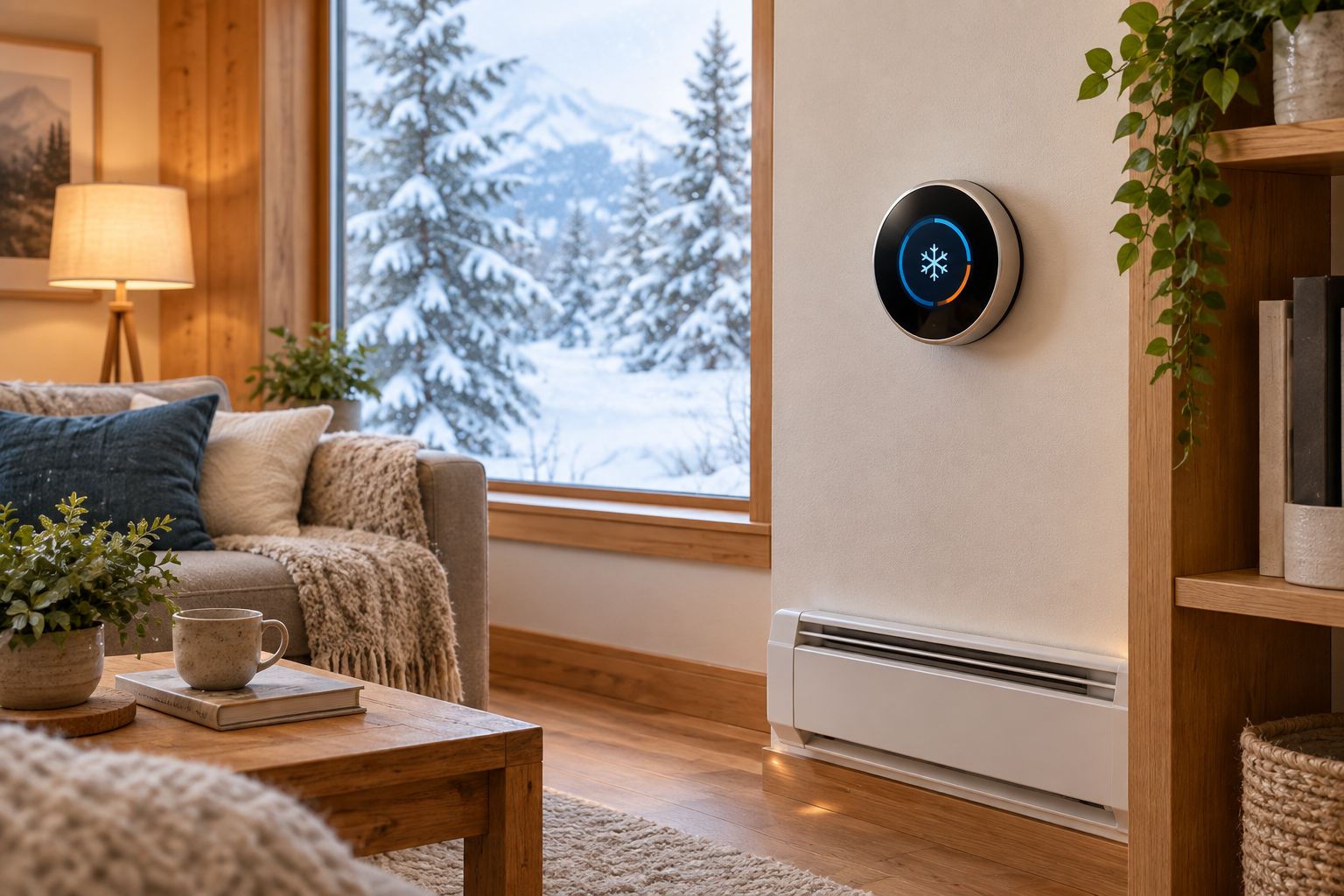
Electric baseboard and in-floor radiant heat run on line voltage, not the low-voltage wiring that Ecobee, Nest, Honeywell, and Sensi all depend on. Mysa is built specifically for line-voltage heaters, which makes it the only realistic smart option for homes, additions, or basements heated this way — a setup that's still common across colder northern regions.
Mysa Smart Thermostat pros:
- Built specifically for line-voltage electric baseboard and radiant heaters
- Adaptive scheduling adjusts per individual room heater
- Simple installation for anyone already comfortable working with baseboard wiring
- Solves a gap none of the low-voltage thermostats above can cover
Mysa Smart Thermostat cons:
- Not compatible with forced-air furnaces or heat pumps
- Needs one unit per heater or zone, which adds up in multi-room homes
- Smaller feature set around whole-home scheduling compared to Ecobee
Best for: rooms or additions heated by electric baseboard or radiant panels. Verdict: Buy.
Not sure which thermostat fits your system
Get your heating system checked before you buy a smart thermostat for winter 2026.
How we ranked these
Each thermostat above was checked against the six criteria listed earlier — aux-heat lockout control, C-wire requirements, room sensor availability, dual-fuel and multi-stage support, local schedule fallback, and line-voltage compatibility — using published manufacturer specifications and HVAC compatibility documentation. No two items compete for the same use case, so the ranking reads as a decision tree based on what's actually installed in the house, not a single best-to-worst leaderboard.
Which smart thermostat should you choose?
If the home runs a heat pump with backup heat, the Ecobee Smart Thermostat Premium is the default pick for 2026 — its aux-heat controls are the most direct way to stop expensive backup heat from running unnecessarily. If a room or zone runs on electric baseboard heat, skip the low-voltage options entirely and go with Mysa. Everyone else should match the thermostat to the wiring and system already in the walls before picking one for the features alone.
“The thermostat’s aux-heat lockout setting matters more in a cold climate than any other feature on the spec sheet.”
FAQ
What’s the best smart thermostat for cold climate heat pump homes in 2026?
The Ecobee Smart Thermostat Premium is the best choice for cold-climate heat pump homes in 2026 because it includes a room sensor and lets you control exactly when aux or emergency heat engages. That control matters most in freezing weather, when backup heat is expensive to run.
Is Ecobee better than Nest for cold weather?
Ecobee is generally the stronger choice for cold weather because its aux-heat and dual-fuel controls are more configurable than Nest’s. Nest still works well for homes with a simple furnace or boiler and no backup heat to manage.
Do smart thermostats work without a C-wire?
Some do. The Emerson Sensi Touch 2 works on many existing 2-wire systems without a power extender kit, making it a practical option for older homes that were never wired for smart thermostats.
What thermostat works with electric baseboard heat?
The Mysa Smart Thermostat is built for line-voltage electric baseboard and radiant heaters, which standard low-voltage thermostats like Ecobee, Nest, and Honeywell cannot control. One Mysa unit is needed per heater or zone.
How do I stop aux heat from running too much in winter?
Adjust the aux-heat lockout or compressor lockout setting on the thermostat so backup electric heat only engages once outdoor temperatures drop below a threshold you set. Ecobee and Honeywell Home T9 give the most direct control over this setting.
Are remote room sensors worth it for a cold climate home?
Yes, in homes where one room runs noticeably colder than the rest, such as additions or rooms far from the main return. Ecobee includes one sensor with its Premium model, and Honeywell Home T9’s Smart Room Sensors average readings across multiple rooms.
Does a smart thermostat still heat the house if Wi-Fi goes down?
Most smart thermostats fall back to a locally stored schedule when Wi-Fi drops, so heating continues on the last set program. Check the specific model’s offline behavior before relying on it during a winter storm.
Can one smart thermostat control both a furnace and a heat pump?
Dual-fuel systems combining a furnace and heat pump need a thermostat built to manage both, such as the Ecobee Smart Thermostat Premium or Honeywell Home T9. Not every smart thermostat supports dual-fuel switching correctly.
One last thing
The feature homeowners skip past most often is the aux-heat or compressor lockout setting, buried a few menus deep on every model in this list — and it's the single setting most likely to change a cold-climate electric bill. Set it once during install, and check it again each fall before the first hard freeze of the 2026-2027 heating season.

