

Minnesota groundwater drops into the 40s°F every winter, and a water heater sized for a mild climate simply cannot keep pace with that cold incoming water. This guide ranks the best water heater for Minnesota homes in 2026 by recovery rate, freeze tolerance, venting, and how each type actually performs through a Twin Cities winter, not just on a spec sheet written for a warmer state.
- Condensing gas tankless is the best water heater for Minnesota homes in 2026 for households with steady, high hot water demand.
- High-recovery power-vent gas tanks beat tankless for large families who don’t want to upsize a gas line.
- Hybrid heat pump water heaters cut electric bills but lose efficiency in unheated Minnesota basements below 40°F.
- Standard atmospheric gas tanks stay the budget pick for simple, like-for-like replacements in 2026.
- Electric resistance tanks make sense mainly where gas service isn’t available or as cabin backup.
Why this matters
A water heater rated for national-average conditions is tested against incoming water closer to 55-60°F. Minnesota wells and municipal lines drop into the 40s°F for months, which means every tank and every tankless unit works harder here than the box implies. Schwantes Heating sees the same failure pattern every winter: a unit that ran fine in a showroom struggles the first time three people shower back-to-back on a January morning.
Freeze exposure is the second variable that most national buying guides ignore entirely. A water heater in an unheated garage or a three-season cabin needs different tolerances than one in a finished basement, and picking the wrong type for that location causes more service calls than any other single mistake homeowners make.
What makes the best water heater for Minnesota homes
- Recovery rate under cold incoming water – a unit rated for 60°F water recovers slower once that water drops to 40°F
- Freeze and frost tolerance – garages, cabins, and unheated mechanical rooms need different protection than a finished basement
- Venting compatibility – atmospheric, power-vent, and tankless flue systems aren't interchangeable with existing gas lines
- Energy factor through winter – the Uniform Energy Factor (UEF) rating that matters most when the unit runs longest
- Footprint in tight mechanical rooms – a common constraint in older Twin Cities homes with small utility closets
- Backup capacity during outages – relevant given Minnesota's winter storm-related power interruptions
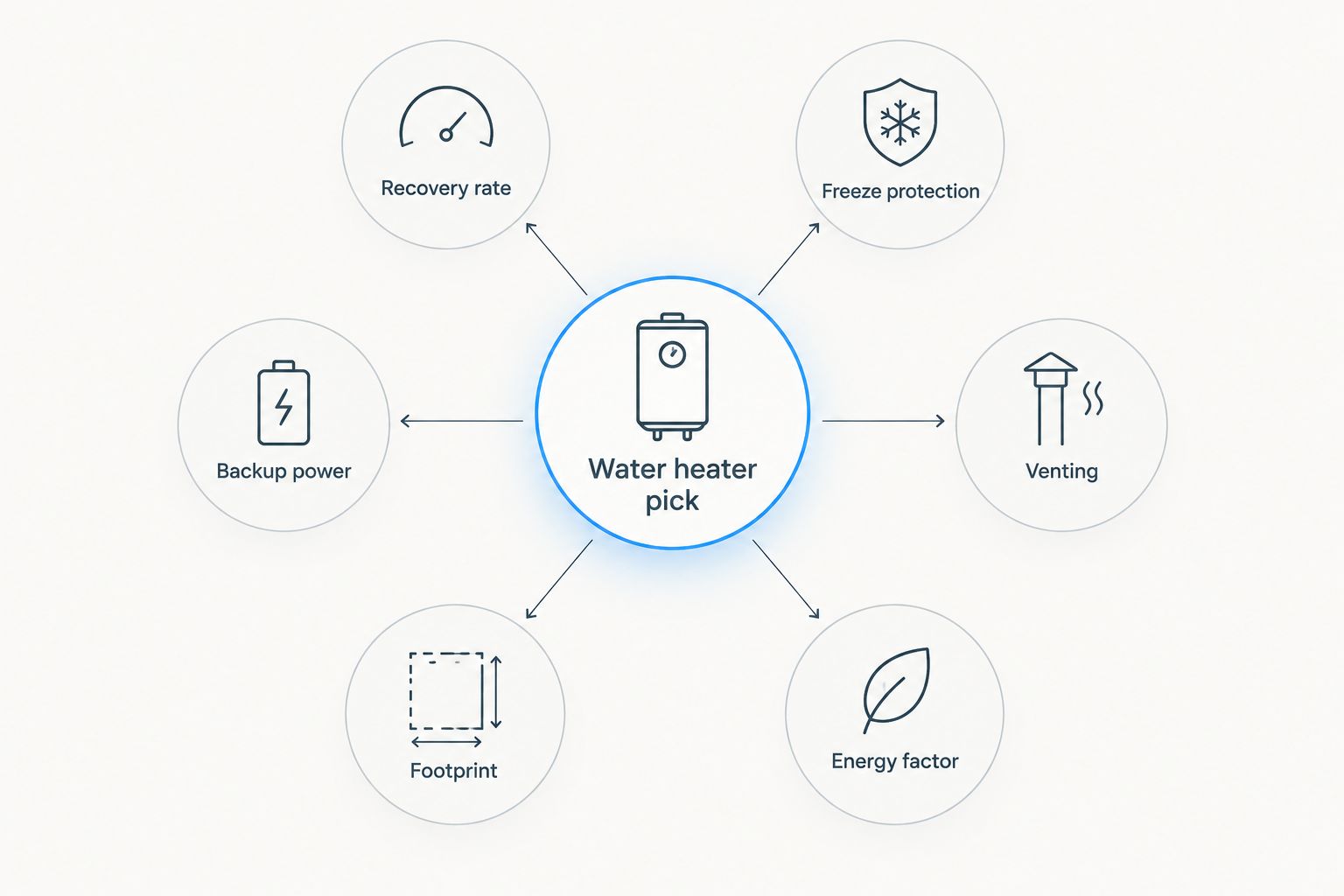
Best water heaters for Minnesota homes at a glance
| Water heater type | Best for | Standout feature | Key limitation |
|---|---|---|---|
| Condensing gas tankless | Endless hot water with cold groundwater | Continuous supply, no standby heat loss | Install often needs a larger gas line |
| High-recovery power-vent gas tank | Large families needing fast recovery | Recovers a full tank faster than atmospheric models | Standby heat loss remains |
| Hybrid heat pump water heater | Insulated basements chasing lower bills | Pulls heat from surrounding air | Efficiency drops below 40°F ambient |
| Standard atmospheric gas tank | Simple, budget-friendly replacement | Lowest install cost, uses existing venting | Lower recovery under heavy use |
| Electric resistance tank | No gas line, or cabin backup | Runs anywhere with a 240V circuit | Slowest recovery, highest operating cost |
1. Condensing gas tankless: best water heater for Minnesota homes with steady demand
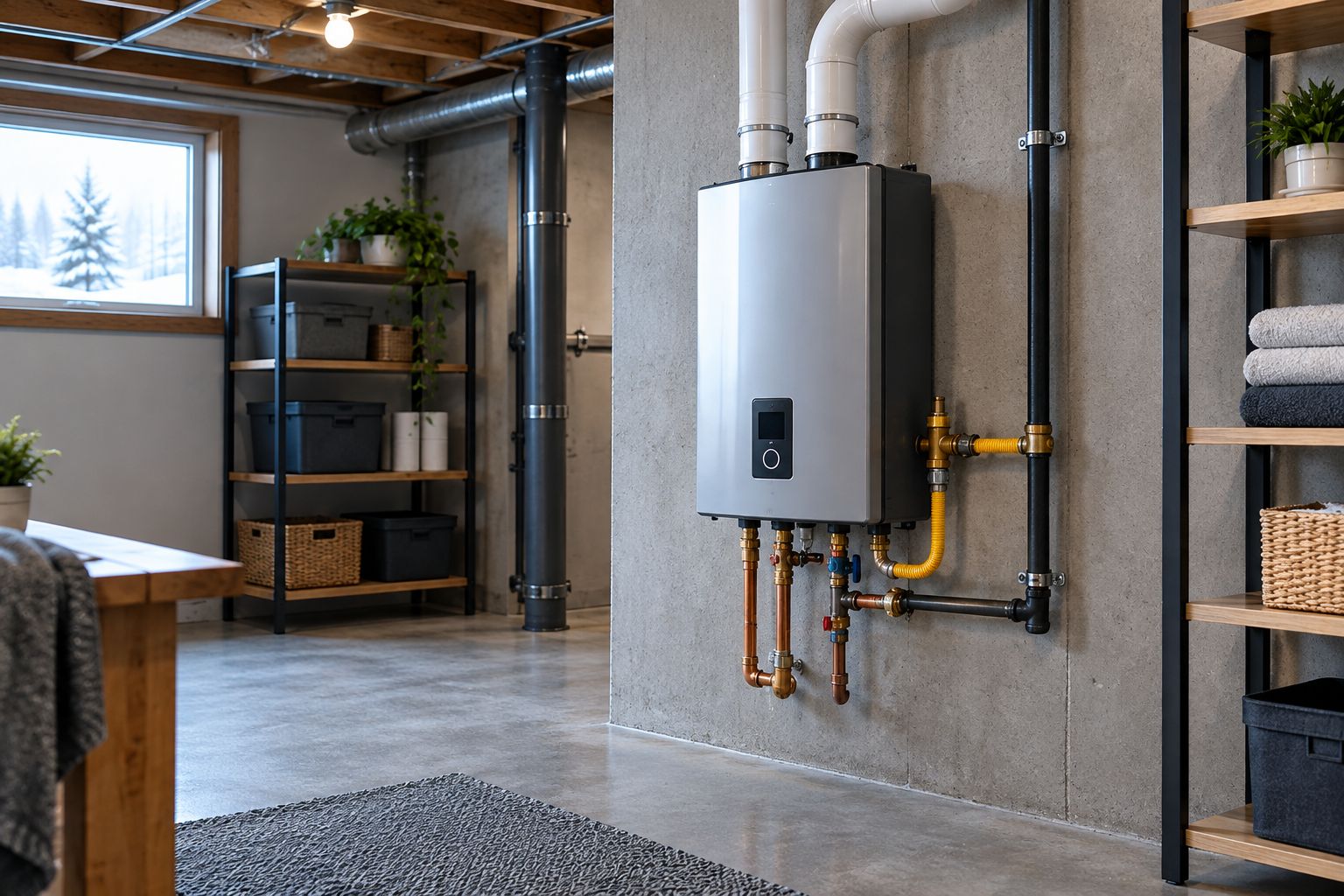
A condensing gas tankless unit heats water on demand and captures exhaust heat that a standard tankless unit would vent outside, pushing UEF ratings above 0.90. It never runs out of hot water because there's no tank to deplete, which matters when Minnesota groundwater is already cold going in.
Condensing tankless pros:
- Continuous hot water, no standby tank to run dry
- Compact wall-mounted footprint frees up mechanical room space
- Lower long-term operating cost than a comparable gas tank
Condensing tankless cons:
- Install frequently requires a larger gas line and dedicated venting
- Cold 40°F incoming water lowers the effective flow rate versus the rated spec
- Higher upfront install complexity than a tank swap
Best for: households of three or more with steady, simultaneous hot water demand. Verdict: Buy.
2. High-recovery power-vent gas tank: best water heater for large families
A power-vent tank uses a blower to push exhaust through PVC venting instead of relying on a chimney, and high-recovery models refill the tank faster than a standard atmospheric unit after heavy use. It's the simpler middle ground between a basic tank and a full tankless conversion.
Power-vent tank pros:
- Faster recovery than atmospheric tanks after multiple showers
- Simpler install than tankless, no gas line upsizing usually required
- Familiar tank format for repairs and parts
Power-vent tank cons:
- Standby heat loss still applies between uses
- Larger footprint than a tankless unit
- Blower adds a mechanical part that can fail
Best for: families of four-plus who want faster recovery without a tankless install. Verdict: Buy.
3. Hybrid heat pump water heater: best water heater for lowering electric bills
A hybrid heat pump water heater pulls ambient heat from the surrounding air to warm the tank, using a fraction of the electricity a standard resistance element uses. It needs roughly 700 cubic feet of surrounding air space and works best where ambient temperature stays above 40°F year-round, which rules out most unheated Minnesota garages.
Installing one often means adding a dedicated 240V circuit for the compressor, and older Twin Cities panels don't always have room without upgrading breakers first — the same electrical capacity planning that comes up when homeowners look at circuit breakers for panel upgrades before adding any new 240V appliance.
Heat pump water heater pros:
- Cuts electric water heating cost compared to standard resistance tanks
- Dehumidifies basement air as a side effect
- Quiet in standby mode compared to a compressor running constantly
Heat pump water heater cons:
- Efficiency drops once ambient air falls below 40°F
- Takes more floor space and clearance than a standard tank
- May require a panel upgrade to add the dedicated circuit
Best for: finished, heated basements chasing lower electric bills. Verdict: Buy if your basement holds above 50°F; Skip for unheated garages.
4. Standard atmospheric gas tank: best budget water heater for Minnesota homes
A standard atmospheric gas tank vents through a chimney using natural draft instead of a blower, keeping the install simple and the parts count low. It's the water heater most Minnesota homes already have, which makes replacement straightforward when the venting is already in place.
Standard atmospheric tank pros:
- Lowest install cost of any gas option
- Works with existing atmospheric venting, no new flue needed
- Simple parts availability for repairs
Standard atmospheric tank cons:
- Lower recovery rate under heavy simultaneous use
- More standby heat loss than power-vent or condensing models
- Mineral content common in Minnesota well water can shorten tank life
Best for: budget-conscious replacements where the existing venting stays as-is. Verdict: Hold — fine if budget rules out the upgrades above.
5. Electric resistance tank: best water heater for homes without gas service
An electric resistance tank heats water with submerged elements and a 240V circuit, with no combustion and no venting required at all. It's the only option for homes without gas service and a common choice for seasonal cabins that need simple, reliable backup.
Electric resistance tank pros:
- Installs anywhere a 240V circuit reaches, no gas line needed
- No combustion venting to plan around
- Straightforward for cabin or off-grid-adjacent use
Electric resistance tank cons:
- Highest operating cost given Minnesota electric rates
- Slowest recovery of any type on this list, worse with 40°F incoming water
- Element replacement is a recurring maintenance cost
Best for: homes with no gas service or seasonal cabins needing backup. Verdict: Buy only if gas isn't an option; Skip otherwise.
How we ranked these water heaters
Each type was measured against the six criteria above: recovery rate under 40°F incoming water, freeze and frost tolerance, venting compatibility with existing Minnesota home construction, UEF rating through a full winter, mechanical room footprint, and how each performs during a power outage. A regular HVAC maintenance plan that covers annual flushing matters more here than in milder climates, since mineral buildup accelerates tank wear faster in hard Minnesota well water.
Get a water heater sized for your home
A quick assessment confirms recovery rate and venting before you buy.
Which water heater should you choose?
For most Minnesota homes, the condensing gas tankless unit is the default pick — it handles cold groundwater without running dry and keeps operating costs down over years of use. Large families who don't want the install complexity should default to a high-recovery power-vent gas tank instead. If the budget is tight and the existing venting still works, the standard atmospheric tank remains a reasonable stopgap, and it pairs well with the same seasonal check-ups covered in a guide to furnaces for Minnesota winters, since both systems get inspected on the same visit.
FAQ
What is the best water heater for Minnesota homes in 2026?
Condensing gas tankless units are the top pick for 2026 because they hold up against 40°F incoming groundwater without running out of hot water. Large families who want simpler installs should look at high-recovery power-vent gas tanks instead.
Is tankless worth it in Minnesota’s cold climate?
Yes, for households with three or more people and steady demand, since condensing tankless units keep UEF ratings above 0.90 even with cold incoming water. The tradeoff is a more complex install that often needs a larger gas line.
How cold does Minnesota groundwater get in winter?
Minnesota groundwater and municipal water commonly drop into the 40s°F during winter months. That’s colder than the 55-60°F many water heaters are rated against nationally, which lowers effective recovery and flow rate.
Do heat pump water heaters work in unheated garages?
No, hybrid heat pump water heaters lose efficiency once ambient air drops below 40°F, which rules out most unheated Minnesota garages. They work best in finished, heated basements that stay above 50°F year-round.
What size water heater does a Minnesota family need?
Sizing depends on household size and peak simultaneous use, but families of four or more typically need a high-recovery power-vent tank or a condensing tankless unit to avoid running short during back-to-back showers.
How often should a water heater be serviced in Minnesota?
Annual flushing is standard, and it matters more in Minnesota given the mineral content common in local well water. A maintenance plan that includes this flush extends tank life noticeably.
Can electric water heaters keep up with Minnesota winters?
Electric resistance tanks work but recover slowest of any type on this list, especially with 40°F incoming water, and they carry the highest operating cost given Minnesota electric rates. They make sense mainly where gas service isn’t available.
What is UEF and why does it matter for cold climates?
UEF, or Uniform Energy Factor, measures how efficiently a water heater converts energy into hot water over a full day of use. In Minnesota, where units run longer against colder incoming water, a higher UEF rating translates into a bigger real-world savings gap.
One last thing
Minnesota's hard well water is the detail most buying guides skip entirely: mineral buildup inside a tank accelerates faster here than in states with softer municipal water, which means the flush interval matters as much as the unit you buy. Whichever type wins your pick for 2026, put the flush on a calendar the day it's installed, not the day it starts running slow.
Related guides

