

Best overall whole-home humidifier for dry air in 2026: the Aprilaire 700. Best for large or very dry homes: the Honeywell TrueSTEAM. Best budget option: the Aprilaire 600. Each one solves a different problem — coverage, precision, or cost — and the wrong pick means cracked trim and static shocks all winter.
- Aprilaire 700 wins the best whole home humidifier for dry air pick for most homes under roughly 4,200 sq ft.
- Honeywell TrueSTEAM is the steam option for large or unusually dry homes where bypass units run out of capacity.
- Aprilaire 600 is the budget bypass pick — cheaper hardware but slower recovery on the driest days.
- GeneralAire 1042 and Honeywell HE360A are solid retrofit picks for tight mechanical closets, not top-tier performers.
- Sizing to square footage matters more than brand — an undersized unit never hits target humidity in 2026’s coldest stretches.
Why this matters
Indoor humidity below 30% in winter cracks hardwood, static-shocks your kids, and dries out sinuses — DOE and ASHRAE guidance both put the healthy winter range at 30-50%. A furnace alone can't fix that; it just moves dry air around faster.
A whole-home humidifier ties into your ductwork and treats every room the furnace serves, instead of one room at a time like a portable unit. Schwantes Heating sizes and installs these systems against your actual square footage and duct layout, which is the step most homeowners skip when they buy off a shelf.
The picks below cover the three humidifier types sold in 2026: bypass, fan-powered, and steam. Which one fits your house depends on your furnace's blower runtime and how dry your climate actually gets.
What makes the best whole-home humidifier
- Square footage match — every unit is rated for a coverage range; buying under that range wastes money, buying over it never reaches target humidity.
- Humidistat precision — digital auto-adjusting control beats a manual dial for holding a steady 35-45% without babysitting it.
- Humidifier type fit — bypass units need the furnace blower running to work; fan-powered and steam units don't.
- Maintenance cadence — water panels and steam cylinders wear out on a schedule; ignoring it drops output and grows mold.
- Install complexity — supply/return tie-ins, electrical needs, and water line access all change what a professional install costs in labor.
- Furnace compatibility — not every unit mounts cleanly on every duct configuration or air handler.
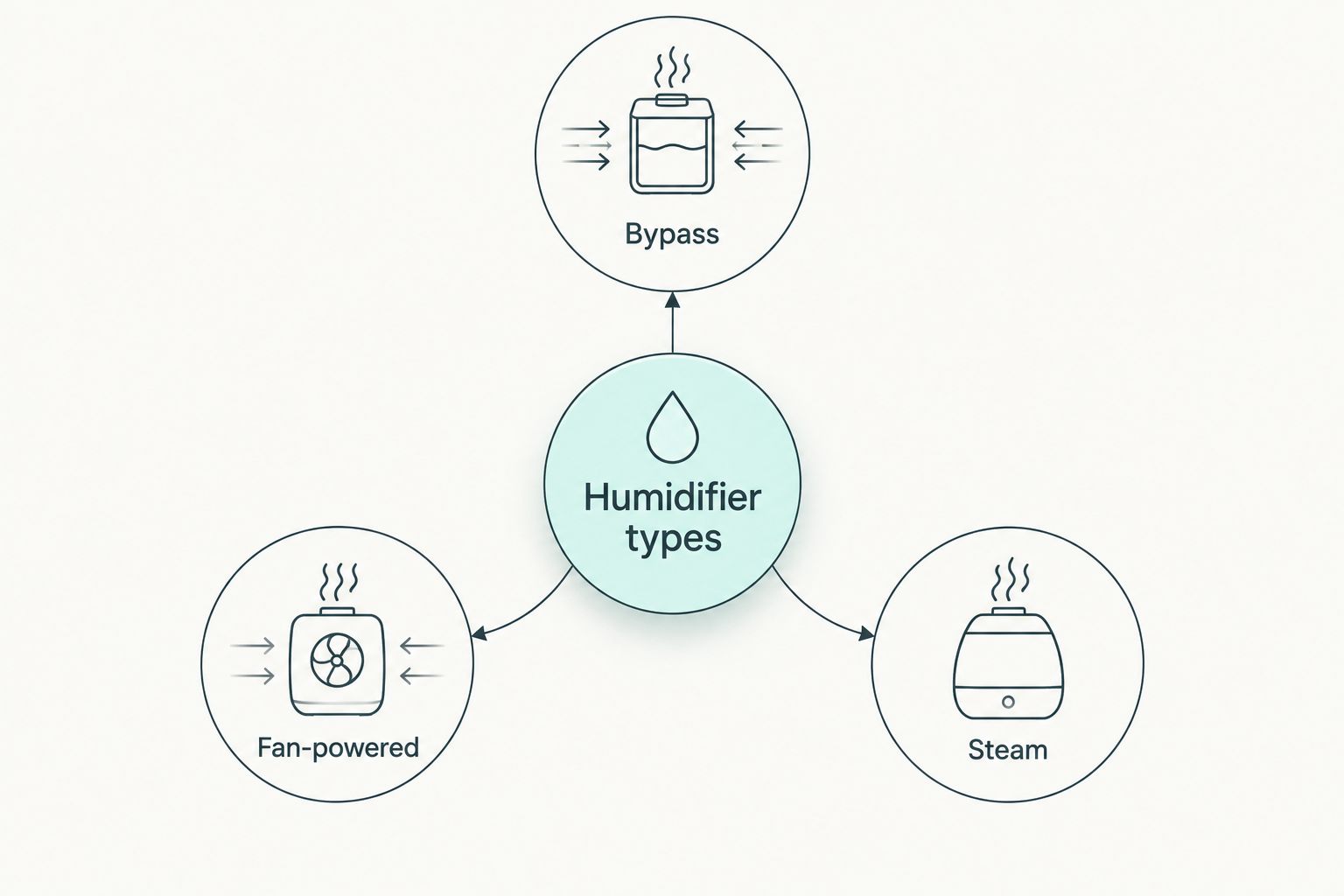
Best whole-home humidifiers for dry air in 2026: at a glance
| Item | Best for | Standout feature | Key limitation |
|---|---|---|---|
| Aprilaire 700 | Whole-home coverage in most houses | Fan-powered design, doesn't rely on blower cycling | Needs supply and return duct tie-ins |
| Honeywell TrueSTEAM | Large or very dry homes | Steam output runs independent of furnace airflow | Higher electricity draw, more complex install |
| Aprilaire 600 | Budget-focused homeowners | Simple bypass mechanism, low parts cost | Only humidifies while the blower runs |
| GeneralAire 1042 | Simple bypass swaps | Widely available parts, easy service | Mechanical humidistat lacks digital precision |
| Honeywell HE360A | Tight mechanical closets | Compact housing with digital humidistat | Coverage capped below fan-powered units |
1. Aprilaire 700: best whole-home humidifier for full-house coverage
The Aprilaire 700 is a fan-powered, flow-through humidifier with a digital automatic humidistat, manufacturer-rated for homes up to roughly 4,200 sq ft. Because it has its own fan, it pushes humidified air through the ducts even when the furnace blower isn't running, which is the biggest gap in cheaper bypass units.
Aprilaire 700 pros:
- Digital humidistat holds a set target without manual adjustment
- Fan-powered design distributes humidity evenly, blower on or off
- Water panel typically lasts a full heating season
Aprilaire 700 cons:
- Requires a professional tie-in on both supply and return ducts
- Draws more electricity than a passive bypass unit
- Higher install labor than simpler bypass models
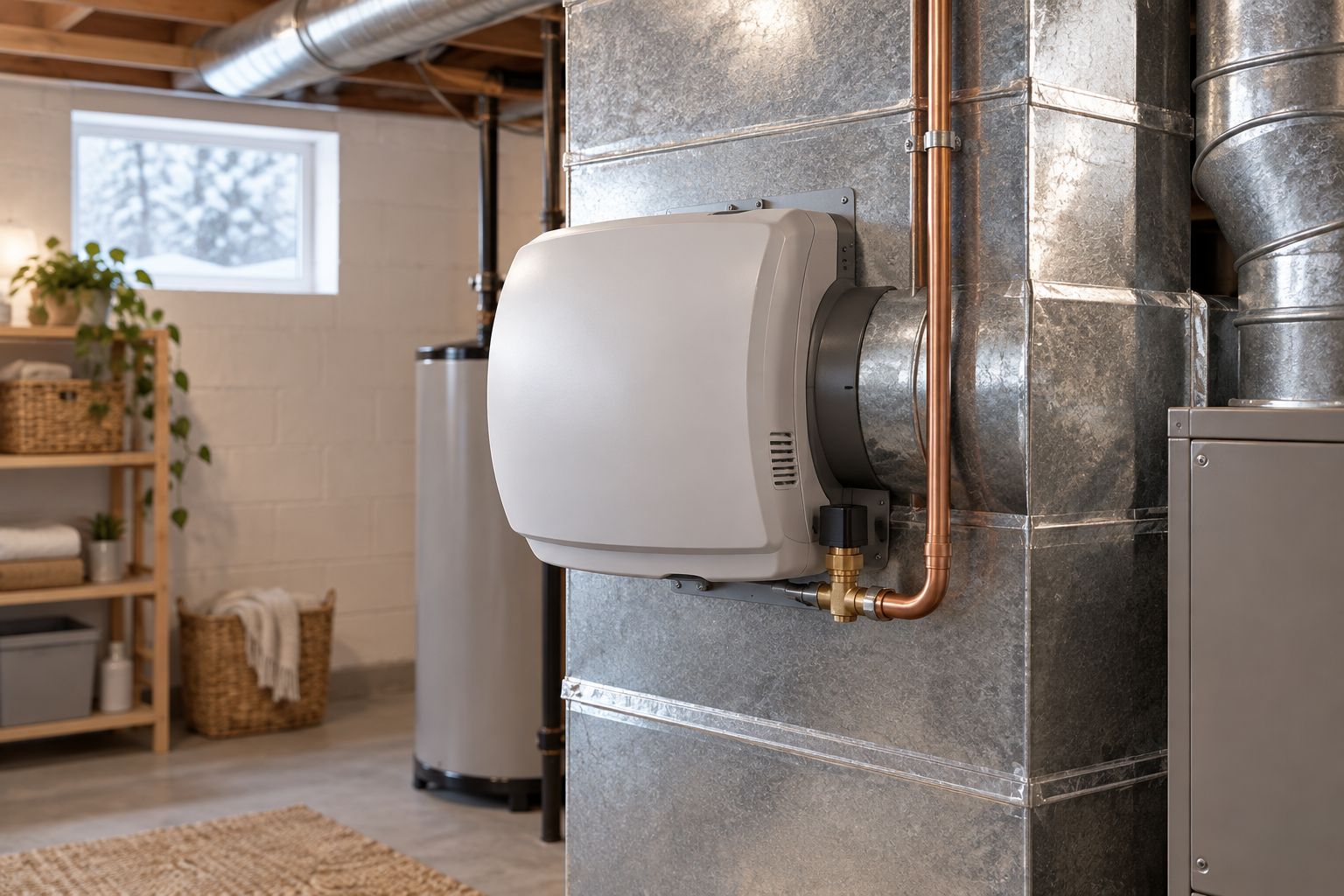
Aprilaire 700 verdict: Buy. It's the default choice for most homes fighting dry winter air in 2026.
2. Honeywell TrueSTEAM: best whole-home humidifier for large or very dry homes
The Honeywell TrueSTEAM is a steam humidifier — it boils water and injects vapor directly into the duct system rather than relying on airflow to evaporate moisture off a pad. That makes it the strongest option when a home runs bigger than a bypass or fan-powered unit can handle, or when winter air runs especially dry.
Honeywell TrueSTEAM pros:
- Produces humidity even when the furnace fan is off
- Most precise humidity control of the three types
- Handles larger conditioned space than bypass designs
Honeywell TrueSTEAM cons:
- Draws noticeably more electricity than bypass or fan-powered units
- Steam cylinder needs periodic replacement
- Install is more involved — dedicated electrical circuit in most cases
Honeywell TrueSTEAM verdict: Buy for large or extreme-dry-climate homes, skip it if a fan-powered unit already covers your square footage.
3. Aprilaire 600: best budget whole-home humidifier
The Aprilaire 600 is a bypass humidifier rated for homes up to roughly 3,000 sq ft. It uses the furnace's own blower to push air through a wetted pad, which keeps the mechanical design simple and the parts cheap to replace.
Aprilaire 600 pros:
- Lower hardware cost than fan-powered or steam models
- Simple mechanical design with fewer failure points
- Water panel swaps are a quick seasonal task
Aprilaire 600 cons:
- Only humidifies while the furnace blower is actively running
- Smaller rated coverage than the 700
- Bypass airflow adds a small duct pressure drop
Aprilaire 600 verdict: Buy if budget is the deciding factor and your home stays under 3,000 sq ft.
4. GeneralAire 1042: best whole-home humidifier for simple bypass swaps
The GeneralAire 1042 is a basic bypass humidifier with a mechanical humidistat, built for straightforward duct tie-ins on standard residential furnaces. It's the no-frills option when a homeowner just needs a working bypass unit without digital controls.
GeneralAire 1042 pros:
- Widely available replacement parts
- Simple mechanical humidistat is easy to service
- Fits most standard furnace duct configurations
GeneralAire 1042 cons:
- Mechanical dial is less precise than a digital humidistat
- Rated coverage trails the Aprilaire 700 and TrueSTEAM
- Water panel needs replacing every season for consistent output
GeneralAire 1042 verdict: Hold. Fine as a low-cost swap-in, but skip it if you want set-and-forget precision.
5. Honeywell HE360A: best whole-home humidifier for tight retrofit installs
The Honeywell HE360A is a compact bypass humidifier with a digital humidistat, built to fit mechanical closets where clearance around the ductwork is limited. It's a retrofit-friendly option more than a performance leader.
Honeywell HE360A pros:
- Compact housing fits tight duct clearances
- Digital humidistat, unlike the mechanical dial on the GeneralAire 1042
- Moderate cost relative to fan-powered models
Honeywell HE360A cons:
- Still bypass-dependent on blower run time
- Coverage capped below the Aprilaire 700
- Only a modest step up over cheaper bypass units despite the digital control
Honeywell HE360A verdict: Hold. Good retrofit choice for cramped closets, not a performance upgrade over the 700.
How we ranked these
Each unit was weighed against the six criteria above: rated square footage, humidistat precision, humidifier type versus duct/blower setup, maintenance cadence, install complexity, and furnace compatibility. The Aprilaire 700 wins on the combination of coverage and independence from blower cycling; the TrueSTEAM wins narrowly on raw capacity and precision for larger homes; the rest trade some performance for lower parts cost or easier retrofits.
“A bypass humidifier only works while the blower is running — that’s the detail most buyers miss until January.”
Which whole-home humidifier should you choose?
Most houses under about 4,200 sq ft do best with the Aprilaire 700 — it covers the widest range of homes without depending on the furnace blower cycling on and off. If your home runs larger, or winter air where you live gets severely dry, step up to the Honeywell TrueSTEAM. If the budget is the deciding factor and your home stays under 3,000 sq ft, the Aprilaire 600 does the job for less money.
Sizing and duct tie-in matter more than brand choice. A unit rated for 4,200 sq ft installed on a 2,000 sq ft home wastes money; the reverse leaves you dry through February.
Get your home sized for a humidifier
Schwantes Heating matches unit type and capacity to your square footage and duct layout.
FAQ
What’s the best whole-home humidifier for dry air in 2026?
The Aprilaire 700 is the best overall pick for most homes under roughly 4,200 sq ft because it’s fan-powered and doesn’t depend on the furnace blower running. Larger or unusually dry homes do better with a steam unit like the Honeywell TrueSTEAM.
Is a fan-powered humidifier better than a bypass humidifier?
Yes, for consistency — a fan-powered unit like the Aprilaire 700 keeps working whether the furnace blower is on or off, while a bypass unit like the Aprilaire 600 only humidifies during active heating cycles. Bypass units cost less to buy and install.
How much square footage does a whole-home humidifier cover?
Coverage ranges from roughly 3,000 sq ft on bypass models like the Aprilaire 600 up to 4,200 sq ft or more on fan-powered and steam units. Matching the rating to your actual conditioned square footage is the single biggest factor in whether it hits target humidity.
Is a steam humidifier worth the extra cost?
It’s worth it for large homes or climates with severe winter dryness, since steam units like the Honeywell TrueSTEAM run independent of furnace airflow and deliver more precise control. For an average home, a fan-powered unit does the job for less electricity and simpler maintenance.
What humidity level should a whole-home humidifier target in winter?
DOE and ASHRAE guidance puts the healthy indoor range at 30-50% year-round. In cold climates, holding humidity much above 40% during freezing weather often condenses on window glass and inside exterior walls.
Can I install a whole-home humidifier myself?
Bypass units are mechanically simple, but every type still needs a water line, duct penetration, and correct sizing against your furnace’s blower capacity. A professional install avoids the duct leaks and oversizing mistakes that cause most callbacks.
How often does a whole-home humidifier need maintenance?
Water panels on bypass and fan-powered units are typically replaced once per heating season, and steam cylinders on units like the TrueSTEAM wear out on their own schedule based on water hardness. Skipping replacement drops output and can grow mold in the housing.
Does a whole-home humidifier work with any furnace?
Most forced-air furnace systems can accept a bypass or fan-powered humidifier with the right duct tie-in, but clearance, blower capacity, and electrical access vary by home. That’s the sizing check worth doing before buying a unit off a shelf.
One last thing
The detail that trips up most DIY buyers isn't the brand — it's that a bypass humidifier only humidifies while the furnace blower is actively running. On a mild 2026 winter day when the furnace barely cycles, a bypass unit like the Aprilaire 600 or GeneralAire 1042 does almost nothing, while a fan-powered or steam unit keeps working regardless. If your climate swings between mild and brutally cold, that gap is worth the extra install cost.

